07 March 2007

Colour Playtime

Spring seems to have arrived with a few sunny days and the garden has become a lot more colourful; this gave me the inspiration for the subject of this article - fun ways to teach colours. Children learn to name colours at different ages however it is never too early to start and it can be great fun!

Here are some ideas for colourful experiences:
  1. Name colours in general conversation, “look there is a yellow digger”, “look at that black bird”, “can you eat up your red strawberry” etc.
  2. Use colours as part of choices, “do you want to wear the red t-shirt or the blue t-shirt?”, “what colour plate would you like?”
  3. Play matching games, using simple colour flashcards get your toddler to find an object the same colour or take the card to something the same colour.
  4. Play the game ‘I spy’ but instead of saying “something beginning with the letter…” say “something the colour…” and guess things that are that colour, you can also use patterns – “stripy”, “spotty” etc or try the more abstract “I’m thinking of something that is…” for things out of view
  5. Go on a colour adventure – choose a colour and while you are out see what you can spot that is that colour, or try and find a rainbow – something of each colour in turn.
  6. Play turn-taking games that involve matching colours or throwing coloured dice
  7. Use colours as part of physical play, play with coloured beanbags, balls, and hoops, get children to run to, kick, or throw a certain colour.
  8. Have a colour day – choose a colour and make that your theme of the day, wear clothes that are that colour, eat food that is that colour, play with toys that are that colour, paint pictures with that colour.
  9. Use colours in messy play:
  • Add food colouring to water for colourful water play
  • Mix paints – paint one hand yellow and the other blue, make a handprint picture... then see what happens when the hands are rubbed together
  • Mix playdoh – get a ball of red and a ball of yellow, what happens when you mix them together
  • Freeze coloured water in a variety of containers and watch what happens when it melts, and the colours mix together
  • Make collages using different colour materials, e.g yellow sand, orange lentils, green grass and blue paper
  • Make finger paint pictures

Overall the most important thing when learning colours is to have fun and include colourful language in general conversation.

05 March 2007

Chinese Lantern Festival

The Lantern Festival is celebrated today, a Chinese festival that is celebrated on the fifteenth day of the first month in the lunar year in the Chinese calendar. The Lantern Festival is the last day of the traditional Chinese New Year celebration period and is also known as the Little New Year since it marks the end of the series of celebrations starting from the Chinese New Year.

During the Lantern Festival, children go out at night carrying bright lanterns. In ancient times, the lanterns were fairly simple, for only the emperor and noblemen had large ornate ones; in modern times, lanterns have been embellished with many complex designs. For example, lanterns are now often made in shapes of animals.

Traditionally, the date was a day for love and matchemaking. It was one of the few nights in ancient times without a strict curfew. Young people were chaperoned in the streets in hopes of finding love. Matchmakers acted busily in hopes of pairing couples. The brightest lanterns were symbolic of good luck and hope.

Those who do not carry lanterns often enjoy watching informal lantern parades. Other popular activities at this festival include eating tanguan), a sweet glutinous rice dumpling served in a sugary soup, and guessing lantern riddles, often messages of love.


Activity Idea
Making oriental paper lanterns is a great way to practice scissor skills – fold a piece of paper in half lengthways and make a series of cuts from the centre fold to about two centimetres from the edge, open the paper out and roll along the two short ends then join to make the lantern, add a string to hang it up.

04 March 2007

Purim

Purim begins at sundown tonight (4th March 2007). Purim is the most festive of Jewish holidays. It commemorates a major victory over oppression and is recounted in the Megillah, the scroll of the story of Esther and takes place on the fourteenth and fifteenth days of Adar, the twelfth month of the Jewish calendar. Purim is celbrated by reading Megillat Esther (the scroll Esther), Mishloach Manot - Sending food to friends, Matanot L'evyonim - Giving gifts to the poor, and enjoying a Purim Seuda (meal). At Purim Jews also celebrate by poking fun at themselves and their institutions, throwing synagogue decorum out the window and dressing in costumes. Purim is an important holiday. Jews throughout the world, surrounded by anti-semitism, take great joy in a holiday that reminds them, that even though throughout the course of Jewish History there have been too many real-life "Hamans," in the end Hashem never lets the anti-semites win.

03 March 2007

Magha Puja Day

Today is Magha Puja Day which takes places on the full moon day of the third lunar month. This holy day is observed to commemorate an important event in the life of the Buddha. This event occurred early in the Buddha's teaching life.

After the first Rains Retreat (Vassa) at the Deer Park at Sarnath, the Buddha went to Rajagaha city where 1250 Arahats,(Enlightened saints) who were the Buddha's disciples, without prior appointment, returned from their wanderings to pay respect to the Buddha. They assembled in the Veruvana Monastery with the two chief disciples of the Buddha, Ven. Sariputta and Ven. Moggalana.

The assembly is called the Fourfold Assembly because it consisted of four factors:
  1. All 1250 were Arahats
  2. All of them were ordained by the Buddha himself
  3. They assembled by themselves without any prior call
  4. It was the full moon day of Magha month

Holi

Today is the Hindu festival of Holi - an annual festival celebrated on the day after the full moon in the Hindu month of Phalguna (early March). It celebrates spring, commemorates various events in Hindu mythology and is time of disregarding social norms and indulging in general merrymaking. Holi is probably the least religious of Hindu holidays. During Holi, Hindus attend a public bonfire, spray friends and family with colored powders and water, and generally go a bit wild in the streets.

Holi is spread out over two days (it used to be five, and in some places it is longer). The entire holiday is associated with a loosening of social restrictions normally associated with caste, sex, status and age. Holi is also characterized by the loosening of social norms governing polite behavior and the resulting general atmosphere of licentious merrymaking and ribald language and behavior. A common saying heard during "Holi is bura na mano, Holi hai" ("don't feel offended, it's Holi").

Holi usually begins with the lighting of bonfires which have been built by everyone. People light their household fires, and then the community fire is kindled by a brahim priest. The ripening of the first wheat and barley crop is celebrated by being offered to the fire, and the roasted barley is eaten. The ashes of the fires are marked on the forehead to bring good luck in the year ahead.

After the bonfires comes the throwing of colour, which gives the holiday its common name as the 'Festival of Colours'. People throw coloured water and powders over friends or anyone who passes by. It is a happy celebration, everybody dances and has great fun. Processions of floats carrying statues of the gods line the streets. This ritual is said to be based on the story of Krishna and Radha as well as on Krishna's splashing of the maids with water, but mostly it celebrates spring with its bright colours.

Some fun activity ideas to celebrate Holi are:
  • Adding food colouring to water for colourful water play
  • Painting paper with water and sprinkling on powder paints
  • Putting paint in squeezy bottles and squirt on paper (probably best done in the garden!)
  • Finger painting

Favourite Words

What's your favourite word? Can you help to build a mile-long Wall of Words by adding to it to the wall before the end of March (that's 50,000 words) and help raise money for I CAN, the children's communication charity. When the target is reached, Openreach will turn every word into cash and donate £50,000 to I CAN. It costs nothing to add your favourite word and you also get the chance to win an Apple MacBook or iPod Nano (terms and conditions apply). Visit http://www.wallofwords.co.uk to add your favourite word.

01 March 2007

St David's Day

The 1st March is St David's Day, Saint David (Dewi Sant in Welsh) is the patron saint of Wales and his day is celebrated in Wales and by Welsh people throughout the world.

St David of Wales or Dewi Sant, was a saint of the Celtic Church. He was the son of Sandde, Prince of Powys, and Non, daughter of a Chieftain of Menevia whose lands included the peninsula on which the little cathedral town of St David's now stands. St David is thought to have been born near the present town of St David's.

David was educated at what is usually taken to be Whitland in Carmarthenshire under Saint Paulinus of Wales. He became renowned as a teacher and a preacher, founding monastic settlements and churches throughout Wales, Cornwall and Brittany. He rose to a bishopric, and presided over two synods, as well as going on pilgrimages to Jerusalem (where he was anointed as a bishop by the Patriach) and Rome. St David's Cathedral now stands on the site of the monastery he founded in the remote and inhospitable valley of 'Glyn Rhosyn' in Pembrokeshire. David was buried at St David's Cathedral and unlike many contemporary 'saints' of Wales, David was officially recognised by Pope Callixtus II in 1123.

Many miracles have been associated with Saint David and medieval pilgrims equated two pilgrimages to St David's as worth one pilgrimage to Rome due to his holiness and over fifty churches in South Wales alone bear his name!

To celebrate St David's Day many children take part in school concerts or eisteddfodau, with recitation and singing being the main activities. Historically children would wear traditional Welsh costumes to school however dressing up for St David's day now includes dressing in rugby outfits or even as dragons! Many Welsh people will wear one or both of the national emblems of Wales on their lapel the daffodil (a generic Welsh symbol) or the leek (Saint David's personal symbol) on this day. The association between leeks and daffodils is strengthened by the fact that they have similar names in Welsh, Cenhinen (leek) and Cenhinen Bedr (daffodil, literally "Peter's leek").


Two fun craft activities to celebrate St David's day are making leeks and daffodils.

  • To make a leek get a rectangle white paper, and turn it so that the long side is at the bottom, colour the top half of the page green, turn it over and do the same on the other side, roll the paper tightly and secure on the white part with tape, using scissors make cuts down the green part about a centimetre apart and ruffle them to look like the leek's leaves.
  • To make a daffodil, paint one egg segment from an egg box yellow, cut some petals from yellow card and stick them on the bottom of the segment in a flower shape, then add a green pipecleaner for a stem and some green tissue leaves.

Dydd Gwyl Dewi Hapus

World Book Day


Today, Thursday 1st March 2007 is World Book Day. World Book Day is a United Nations Educational, Scientific and Cultural Organisation (UNESCO) designated day as a worldwide celebration of books and reading, and was marked in over 30 countries around the globe last year.

The origins of the day come from Catalonia, where roses and books were given as gifts to loved ones on St. George's Day - a tradition started some 80 years ago. Although this is a world event, the date varies from country to country, it occurs early in March in the UK and Ireland because the initiative is so well established in schools it is important the Day happens in term time to really make the most of this opportunity to celebrate books and reading.

The main aim of World Book Day is to encourage children to explore the pleasures of books and reading by providing them with the opportunity to have a book of their own.

Schools all over the country are celebrating World Book Day with children dressing up as characters from their favourite books - send me your pictures and I'll add them here! Popular characters include:
  • a Witch (from Room on a Broom)
  • Milly Molly Mandy
  • Harry and his bucket full of dinosaurs
  • Tracey Beaker
  • a cat (from The Cat in the Hat)
  • the children from The Lion, the Witch and the Wardrobe
  • a Fairy (from That's not my fairy)
At Littlesheep Learning we are celebrating World Book Day by holding a special book sale for the month of March - all our children's books are on special offer with savings of 33% off the RRP.

27 February 2007

New Visual Perception Skills Book


We are now stocking a NEW Visual Perception Skills book which is written by the same authors as the popular Cutting Skills and Fine Motor Skills book. This fully photocopiable book contains over 40 illustrated activities to improve the visual perception skills which are vital in effectively accessing the learning environment. It features tasks that are sorted into topics and cover a range of visual skills such as visual discrimination, matching, size grading, figure ground perception and recall.

26 February 2007

March Dates 2007

As we approach the 1st March I thought a list of diary dates might help those of you in childcare or educational settings complete your months planning. Hopefully blog posts around the days will also help you with activity ideas.

1st - St David's Day (Patron Saint of Wales)
1st - World Book Day
3rd - Magha Puja (Buddhist
)
3rd - Holi (Hindu)
4th - Purim (Jewish)
5th - Lantern Festival (Chinese)
8th - International Women's Day
12th - Commonwealth Day
14th - No Smoking Day

14th - Sikh New Year
16th - Red Nose Day
17th - St Patricks Day - Patron Saint of Ireland
18th - Mothering Sunday (Mother's Day)
18th - British Sign Language Day
20th - World Storytelling Day
21st - World Poetry Day
21st - First Day of Spring - Spring equinox
21st - World Forestry Day
22nd - World Day for Water
23rd - World Meteorological Day
25th - British Summer Time Begins
27th - World Theatre Day
27th - Rami Navami (Hindu)
31st - Mawlid-un-Nabi (Muslim)

Look out for more information coming soon!

23 February 2007

Are you home educating?

A study, commissioned by the Department for Education and Skills, has concluded that there is no accurate picture of the extent of home educating - an attempt to find out how many children in England are being educated at home suggests the number might range between 7,400 and 34,400, based on the sample study of nine local authorities found between 0.09% and 0.42% of school populations being taught at home - but this would not include any children who were not registered as home-educated. The study concludes that even a full national survey would not be likely to deliver a reliable figure, because many home-educated children would remain unknown to local authorities and home-education organisations. Read more about the report here.

So what is home educating? who does it? why? and how?
Most people choose to send their children to a school to be educated, but it is legal to educate your child at home. Home-education is an alternative to school and any family can choose this option for their child which means parents choose to keep the responsibility for the education of their children instead of delegating it to a school. Some families make the decision to home educate long before their child reaches 'school age' whereas others deregister their children from school later after finding that their child does not fit in at school for whatever reason. Lots different types of people home educate their children for many different reasons so whoever you are there are bound to be people like you!

The method of learning is entirely up to you and your child, you can use any approach that you consider suitable - there are as many different ways of educating as there are families. Most home educating families tends to fall somewhere between formal curriculum based teaching and totally child led learning. Some parents teach in a formal manner (sometimes called home-schooling), using a fixed timetable which keeps school hours and terms, and a curriculum based on traditional school subjects (sometimes the national curriculum). This appproach may be chosen when a child is first withdrawn from school where the routine offers stability or when a child may be returning to school in the future. Other families take advantage of the fact that home-educated children do not have to follow the national curriculum or a timetable, allowing them to have far greater flexibility. They may choose an autonomous approach, allowing the child to determine the areas of study and to decide how, when and what to learn, using individual interests and a natural curiosity as a starting point. Children whose enthusiasm for learning has been seriously affected by school problems often benefit from this relaxed and child-centred approach (sometimes known as free-range education). However you choose to home-educate you may find that your methods will change on grow.

For more information
Education Otherwise is a membership organisation, with over four thousand families, groups and individual members distributed throughout the UK and abroad, and has evolved into a self-help organisation which can offer support, advice and information to families who are practising or contemplating home-based education as an alternative to schooling.

Home Education Advisory Service (HEAS) a national home education charity based in the United Kingdom, dedicated to the provision of advice and practical support for families who wish to educate their children at home in preference to sending them to school.

Muddlepuddle a site full of information about home educating with ideas on themes to help youngsters and links to resources, it is a must for parents of all young children.

Are you home educating? Let us know about your activities!

15 February 2007

Handwriting Aids

This is the second part of a series of posts looking at the question of how to help children with hand writing. The first post looked at letter formation and this one will highlight some of the equipment than can assist the development of the correct triangular hold of the writing implement.

One of the simplest aids are triangular pens and pencils, for example, the Handhugger Pencil. These triangular HB pencils are popular in schools and nurseries and have a strong lead for younger writers. They are ideal for all early writing and drawing activities because the chunky triangular shape enables children to hold the pencil easily. Handhugger pencil's are also great for those with fine motor difficulties and helping children to use the correct grip.

The Handhugger range includes pencils, pens (black) and (blue), colouring pencils and colouring pens so are ideal for all preschool and primary children to develop their writing and drawing skills.

The next group of writing aids are pencil grips. At Littlesheep Learning we sell three types of pencil grip; the Triangular pencil grip, the Tri-Go pencil grip and the Grippy pencil grip. These grips fit on to standard pencils or ballpoint pens and makes them easier to hold in the correct triangular grip. Ideal for children with fine motor or handwriting difficulties.

Different people find different aids best for them. Some people prefer a triangular pencil and other prefer on of the pencil grips, to help you select the type of grip most suited to you or your child at Littlesheep Learning we sell a special value Triangular Writing Set. The Triangular Writing Set includes: 1 Triangular Pencil Grip, 1 Grippy Pencil Grip, 1 Tri-Go Pencil Grip and 1 Handhugger Pencil.

13 February 2007

Heuristic Play and Treasure Baskets

I've just written this article for our local NCT magazine as it's all relevant to learning I thought I'd post it here.

Treasure Baskets and Heuristic Play
What do you buy for your second child for their first Christmas? – there are only so many rattles / bead frame / pop up toys they need and we already had a good selection from when our eldest was a baby! I remembered that when the eldest started nursery on my return to work he really enjoyed playing with ‘treasure baskets’ so for Christmas we made our younger son one of these.

Heuristic play is the term used to describe play for babies, infants and toddlers that actively encourages exploration by using and developing their senses. The concept was developed over 30 years ago by Elinor Goldshmied, a child psychologist from her work watching children and the way they gained knowledge of the world around them. Treasure baskets are collections of objects should appeal to all the senses and are usually made of natural materials. Children will enjoy exploring the objects to see how they taste, how they feel, how they smell, how they sound and what they look like. Heuristic playhelps children to learn for themselves and make choices.

During the activity the children should explore by themselves, without interference. The adult’s role is to be close to the children as a support, to collect the items, to set out the activity and to observe the children whilst playing. The children can develop their manipulative skills, imagination, solve problems, sequence, anticipate and rearrange objects. There is no right or wrong way for the children to explore the materials. The activity also promotes the development of concentration skills, through the exploration of interesting objects.

Every treasure basket is unique to its creator but its purpose is the same. The best treasure baskets are organic – growing over time when new items are spotted to add – older children can also help select items for their baskets.

Our treasure basket is actually a large hat box which is leather like on the outside and has a suede type finish inside (I wanted something with a lid!) however traditionally the items are placed in a low sided basket. The treasure basket should be filled with approximately 60 different objects.

Some ideas for items that can be included are:

  • Natural objects: fir cones, pebbles, shells, feathers, corks, pumice stone, loofah, conkers, natural sponge, avocado pear stones
  • Wooden objects: clothes peg, small bowl, curtain rings, wooden nail brush, wooden egg cup, spoons , wooden bowl, honey dipper, wooden egg, pastry brush, shaving brush, small baskets, paint brush, rolling pin, cotton reels, wood off-cuts
  • Metal objects: length of metal chain, spoons, tin lids, garlic crusher, metal beaker, brass curtain rings, bunch of keys, metal bowl, tea strainer, whisk, empty tin, bells
  • Leather, textile, rubber, or fur objects: coloured ribbons, velvet powder puff, piece of leather, flannel, woollen ball, leather purse, rubber gloves, small soft toy, small flannel, rubber ball, tennis ball, fur fabric, small raffia mat, leather glasses case
  • Paper / cardboard objects: notebook, greaseproof paper, egg boxes, sturdy cardboard tubes, the circles from inside sticky tape,
  • Other objects: small jar and lid, plug and chain, hair rollers, toothbrush, scent bags, bone shoe horn, ceramic bowl and anything else that takes your child’s interest!

It is important to ensure that all materials are safe and age appropriate - remember not to include small objects for babies and there may be some items which you would need to remove for older children (for example, chains which they might swing and hit others with). Heuristic play is safe if the objects have been checked for any obvious hazards and the adult is sitting close enough to observe when there is an imminent threat (and can move the child's hand or take an object from them). Only choose items you are comfortable with your child exploring.

Children should be observed during the activity, by observing adults will be able to remove the materials as soon as the children begin to lose interest and notice popular items, which can trigger ideas for additions to the basket. Watching the children can also show skills which can be incorporated into their other play. As with all toys it is important that children do not have unlimited access to these materials as they then become bored of the items and will not discover anything new.

For more information
The Little Book of Treasure Baskets: Little Books with Big Ideas, by Anne Roberts and Sally Featherstone
Elinor Goldschmied –
Infants at Play


12 February 2007

Chatter Matters

I recently wrote about the Chatterbox Challenge which took place last week, I've just found out that 'I CAN' have launched Chatter Matters a DVD and poster set as part of their Make Chatter Matter campaign to help children with speech and language difficulties.

The DVD and posters inside explain how you can give children a great start in life by helping them grow into good communicators, by using everyday activities - from changing nappies and family mealtimes to shopping and getting ready for bed as opportunities for playing and talking together. Presented by Dr Tanya Byron (House of Tiny Tearaways, Little Angels ) the DVD offers dozens of brilliant ideas to help you develop your child's speaking and listening skills throughout their pre-school years. The pack also comes with a series of colourful mini-posters that help you to check the progress of your child's communication development. For your wall or fridge, they are packed with helpful tips. Produced in association with I CAN, the children's communication charity.

Parents can order a DVD and posters as a parent for just 49p postage,
here. I hope this is useful for someone - let me know what you think of it!

09 February 2007

Bookstart

Yesterday my youngest son had his 8 month check and we were given our Bookstart baby pack, a lovely canvas bag filled with two free books (we got Tickle, Tickle by Helen Oxenbury and Peepo Baby by Georgie Birkett) plus a rhyme sheet and lots of other information about sharing books with babies. I thought I'd write about them here just in case there were people who didn't know about these fabulous free resources.

Bookstart aims to provide a free pack of books to every baby in the UK to help create a love of reading. There are three packs; Bookstart for babies (given out in the first year), Bookstart+ (for toddlers 18-30 months) and My Bookstart Treasure Chest (for preschoolers) which are currently available in almost every part of the UK. There are also a special Booktouch pack that aims to give a love of books to blind and partially sighted children of 0 to 4 years and two bilingual Welsh / English packs available in Wales.

You can get your Bookstart packs from your health visitor / local health clinic, early years settings or your local library - so go and get your free books and tell us which ones you enjoy.

02 February 2007

New Maths Games

We now have stock of three new maths snap games - Time Snap, Money Snap, and Fraction Snap. These games are excellent to help children recognise, appreciate and understand equivalent values. Also great to use as flashcards to help children learn to tell the time and about money and fractions.

01 February 2007

FREE Downloadable Resources for February's Festivals

To help you celebrate the three main festivals in February we've added to our range of FREE downloadable resources at Littlesheep Learning. This February there are three festivals that lend themselves to art and craft activities, Valentines Day (14th), Chinese New Year (17th), and Shrove Tuesday (Pancake Day) (20th)

Valentines day offers the opportunity for using our cutting and colouring pages on our
Resources page. Hearts are a simple shape that can be coloured or decorated with scrunched up tissue paper, sticking on coloured paper, glitter or feathers. Cut out the heart shapes to practice cutting skills, make them into cards and give them to someone special. For children who find cutting skills difficult check out the range of adaptive scissors for both left and right handed children.

To celebrate Chinese New Year we have some fabulous festive colouring pages on our
Resources page including a great carnival dragon. Colouring is a fun way to improve pencil skills, for children with fine motor difficulties triangular colouring pencils, and pens might help them to gain the correct triangular pencil grip. Making oriental paper lanterns is a great way to practice scissor skills – fold a piece of paper in half lengthways and make a series of cuts from the centre fold to about two centimetres from the edge, open the paper out and join the two short ends to make the lantern, add a string to hang your lantern. Other fine motor activities for the Chinese New Year could involve eating using chopsticks (or the children’s alternative of tweezer like ones) or making lucky red envelopes (and filling them with money!). Some children may find it fun to copy Chinese writing too, use large paint brushes and rolls of lining paper to write big happy new year scrolls.

Finally, Pancake Day means making pancakes - this involves many fine motor skills. Pouring and measuring out the flour and milk, cracking the eggs, stirring the batter, ladling the batter into a pan, flipping the pancake and then squeezing lemons, sprinkling sugar or spreading on syrup or chocolate spread – are all good fine motor exercises so get your child to help you!. Please make sure children are well supervised when near the cooker / hot oil and frying pans. Alternatively, have fun making pretend pancakes using rolling out play dough (or colour and cut out the ones on our
Resources page) and flip pancakes in a frying pan to your hearts content! Shrove Tuesday is also well known for Mardi Gras carnivals so get creative, make opulent hats and masks sticking on coloured feathers, shiny paper shapes and sprinkling with glitter. When finished bang drums, shake shakers and jingle bells and do a carnival dance!

30 January 2007

National Story Telling Week 2007

Yesterday I held a coffee morning for other mums / dads and small children along with a photographer and a reporter for the local paper, the reason for this is that this week (30th January to 4th February) it's National Storytelling Week and they wanted to know our opinions on sharing stories with our children.

National Storytelling week is an annual event which aims to raise awareness of this ancient form of entertainment - check out
The Society for Storytelling for more information. Storytelling is the ancient tradition stretching back for as long as humans have had speech, known as the 'oral' tradition where stories are shared in groups. The storyteller is an artist, an entertainer and an educator who uses words to take you on a journey of the imagination. Each person will hear something different as the story is created in the space between the teller and the listener.

Storytellers tell traditional folk tales, written tales, anecdotes, urban myths, stories from history, religious or moral tales and stories they have created themselves or which have been created for a specific event. Some storytellers will create a story spontaneously to suit the audience. They tell stories from memory rather than reading them from the book, memorising stories image by image not word for word and may tell a story differently each time they tell it, interacting with their audience, choosing stories and images to communicate with them and some use music, dance, song, pictures or puppets.

Storytelling supports literacy development, storytellers can improve concentration, listening skills and help develop and enrich spoken and written language. Hearing and retelling traditional tales can provide scaffolding for children’s own imaginative stories, giving the child a variety of frameworks to work from.

29 January 2007

SENDIST petition

I've just been sent an email telling me about this petition.

It has been started by parents who had to take their Local Education Authority (LEA)to tribunal (SENDIST = Special Educational Needs and Disability Tribunal) twice to try to get their 12 year old autistic sons needs assessed and met, becuause of their experiences and others they have spoken to they started this petition, as it is via 10 Downing Street website it will go directly to the prime minister after it closes on FEBRUARY 20TH 2007

Read more details or to sign the petition
here.

23 January 2007

Letter Formations

People are often asking me about how to help their children with their handwriting so I thought I would write a series of posts on that topic.

Firstly I thought we should look at the correct letter formations. Different settings use slightly different standard formation so if your child is attending nursery or school it is worth checking with their teacher or key worker how they are teaching the letter formations.

A sample alphabet with formation arrows is shown here:

This is a cursive formation (in preparation for 'joined up' writing) therefore there are flicks on the letters, these may be omitted by younger children (in particular the ones on the o, the v and the w). Other letters that may often formed differently are f, k, t and y.

For letter formation teaching aids check out the Rol 'n' Write alphabet and sandpaper letters at Littlesheep Learning.


20 January 2007

Signing

We have just started attending Sing and Sign classes with our second son and the DVD that we were given when our first son was smaller has been dug out - having just watched the Sing and Sign DVD for what seems like the thousandth time this week I thought I would write about signing.

My first experience of signing was when I learnt the finger spelling alphabet when I was about six, I then learnt a few songs with sign during my time at Brownies and Guides but that was all just for fun rather than specifically about communicating. I then learnt more about using sign to support the spoken word when working on abstract concepts with a child with autism - the theory being that as he was a visual learner giving him the sign whilst giving the receptive instruction would make it more concrete.

In January 2005 I did a two day Makaton course and learnt a lot more signs, and a lot more of the research / theory behind signing. My new enthusiasm for sign supported speech led me to investigate baby signing (hence the DVD as my 'baby' was too old to start the classes) and we started signing at home. We also used the popular Makaton based children's television programme Something Special on CBeebies with Justin and Mr Tumble to increase our signing reportoire.

Baby Signing
As a part of typical child development babies naturally use gestures and sounds before speech is well established to help their parents understand them, for example they point, clap. shake their heads and wave. Baby signing involves introducing extra gestures to help your baby communicate. It's easy to do first signs often include milk, more, change nappy, and tired plus favourite animals and vehicles. Sing and Sign classes are one of a number of baby music classes that involve a mixture of teaching parents signs and music activities to entertain the babies.


Sign Supported English
Signed English (including systems such as Signalong and Makaton) have been developed for the same reason as the now popular mainstream baby signing - to assist those with speech and communication difficulties to communicate their needs alongside developing their speech. Signalong and Makaton were developed using British Sign Language (BSL) signs matched to the key words in a sentence, so that as you speak you sign and speak at the same time. Signs are often pictorial and convey the meaning more easily than words, which are more abstract.

For More Information
Makaton
Signalong
Sing and Sign
Chelltune’s Baby Sign Language Store- Books, DVDs, interactive ebooks, keepsake charts, etc for signing babies and children.

18 January 2007

Every Disabled Child Matters

I've just had an email from the Every Disabled Child Matters campaign group updating me about the progress of The Disabled Children (Family Support) Bill.

This Bill will have its second reading in Parliament on Friday 23rd February and this debate is crucial to the chances of the Bill becoming law. All the information about the Bill can be found
here. It is important to get as many MPs as possible to support the Bill and to commit to turning up to the debate on 23rd February. Thanks to people like you and me contacting our MPs, pledges of support for the Bill from MPs are starting to come in, and the campaign now has 230 MP supporters. If you haven't yet contacted your MP you can contact them here. If you have already contacted your MP pass on this information to get as many MPs as possible to support it.

Finally the Every Disabled Child Matters group have set themselves a new supporter target of 25,000 supporters by July 2007. This is the reporting date for the comprehensive spending review, which we hope will bring new money for disabled children's services. To help them reach our new supporter target, please continue spread the word about
Every Disabled Child Matters.

17 January 2007

Make Chatter Happen

My friend's nursery are joining in the Chatterbox Challenge and I thought it would be worth mentioning here in case anyone reading wanted to join in!

The Chatterbox Challenge calls on children across the UK to practise and perform a rhyme or an action song to raise vital funds for I CAN , the charity that helps children communicate. Our 2007 Challenge has a jungle theme so your cheeky monkeys will have fun practising jungle jingles, roaring like lions and hissing like snakes!

Sing and perform your favourite songs and rhymes and join thousands of children across the UK to raise money for children with a communication disability. It's easy to join in, our free activity pack will give you everything you need, including sponsor forms, songs sheets, stickers and colour in certificates for all the children taking part. Register
online today to receive your FREE activity pack.

I CAN is the children’s communication charity, they work to foster the development of speech, language and communication skills in all children with a special focus on those who find this hard - children with a communication disability.

For more information visit:


I CAN

16 January 2007

Glue Ear

Introduction
We've recently been undergoing hospital appointments for our eldest son due to a long term ear infection. At our last appointment we were told he had "glue ear" so I thought as this is the most common cause of hearing loss in children some information may be useful. Glue ear affects about 4 in 5 children have had glue ear at some point by the time they are four years old and that glue ear remains common among children up to the age of six years old and it causes long-lasting hearing problems in about 1 in 20 five year olds.

What is Glue Ear?
The ear is divided into three parts - the outer, middle, and inner ear. The middle ear behind the eardrum is normally filled with air. The middle ear is connected to the back of the nose by a thin channel, the Eustachian tube. Glue ear is a condition where the middle ear becomes filled with fluid that looks like glue instead of draining away down the Eustacian tube - it can affect one or both ears. The fluid dampens the vibrations of the eardrum and bones (ossicles) made by the sound waves, the cochlea receives dampened vibrations, and so the 'volume' of the hearing is 'turned down'.

What are the Symptoms of Glue Ear?
Dulled hearing is the main symptom of glue ear. The hearing does not go completely and the loss can vary from mild to severe, and can vary from day to day. Pain is not usually a main symptom, but ear ache may occur from time to time as the gluey substance is a good food for bacteria, and ear infections are more common in children with glue ear. Delopment and behaviour may be affected in a small number of children.

Teaching Children with Glue Ear
First off if you are a teacher / teaching assistant you may be the one who spots a child with hearing difficulty. Children with glue ear can experience different levels of hearing loss from day to day even from lesson to lesson, so it is sometimes tricky to notice.

Common signs are:

  • inattention - seeming to hear only what they want to hear
  • talking too loudly
  • being quiet and spending time in a world of their own
  • needing to turn up the volume control on PCs and televisions
  • saying pardon or what? more than usual or needing instructions repeated
  • copying their friends actions
  • reacting less to noises and instructions especially from behind them
  • complaining of ear ache and not feeling well
  • mispronunciation of some sounds or words
  • getting very tired during the day as having to concentrate very hard to hear people uses up a lot of energy
For children identified with hearing impairment the following ideas will help them listen:
  • ensure they have the best seating position (e g. away background noise where possible.)
  • make sure that they can see your face (many children quickly learn to lip read and read facial expressions)
  • attract the childs attention by saying their name before asking a question or giving a instruction
  • be prepared to repeat points
  • when talking to the child speak clearly using a normal voice at normal speed but use gesture / signs to reinforce what you say and keep instructions short
  • if appropriate provide a list of vocabulary, context and visual clues especially for new subjects
  • during class discussion allow one pupil to speak at a time and indicate where the speaker is - allow the child to turn around to see other children when they are talking
  • be aware that difficulty with spelling / phonics can result from hearing loss
Further Information
For more information contact:

Royal National Institute for the Deaf (RNID)


The National Deaf Children's Society

09 January 2007

What's planned for this blog

As hinted below on my New Year post I am planning to get cracking with this blog and make it a much more useful and exciting resource - there are lots of things I need to learn as part of this but for the time being I'm just going to focus on writing more!

Teaching Emotions

I've just been sent this link, it's about a small project that used cartoons narrated by the actor Stephen Fry to help teach children with autism about facial expressions and emotions. The research is promising and having viewed the sample episode online I can see how it would particularly appeal to some of the vehicular obsessed children I've worked with. The series was commissioned by the Department of Culture, Media and Sport, and are now being given to around 30,000 other families with autistic children between the ages of two and eight. For more information and to get your free copy look at The Transporters. Let me know what you think and if it helps your child by adding your comments below.

Whilst reading that article I remembered some of the other resources I've used with children with autism to look at emotions so I thought I'd post them here...

Thomas the Tank Engine books are great as the trains faces are used to show the expression and the stories can be used to explain why the character feels as they do. How do you feel, Thomas? is a specific emotions book with the royalties being donated to The National Autistic Society. The new Underground Ernie trains might also give another opportunity for studying faces. Pingu cartoon are good too as the lack of language in them means that children need to infer the feelings of the characters from their intonation, volume and their facial expressions / non-verbal communication.

Another fun ways to look at emotions are acting out scenarios using puppets, this helps to cement how people feel in situations - a good activity is making puppets with different facial expressions using wooden spoons.

02 January 2007

January Sales!


Our January Sales are now on at Littlesheep Learning.

Check out our fantastic savings of up to 50% but hurry as all offers are limited by the stock availability.

Competition Winners

Thank you to all the children who entered our Decorate a Christmas Tree competition, we received some lovely trees and it was very hard to judge the winners.

We are pleased to announce that the winners are:

Eloise from Bolton and Kate from Milton Keynes

Look out for further competitions at Littlesheep Learning later in the year.

Happy New Year

Happy New Year to all our readers - I hope that 2007 will be a successful year for you all.

I've made some New Year Resolutions for both this blog and for Littlesheep Learning so watch out for what's new! I've got lots of educational and teaching ideas to post - let me know your favourite teaching and learning ideas, your top tips for keeping your children enjoying learning or about their favourite toys.

07 December 2006

More Orchard Toys Games in Stock


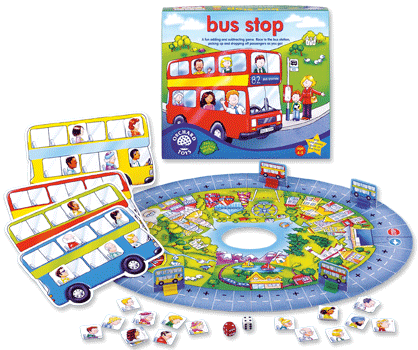
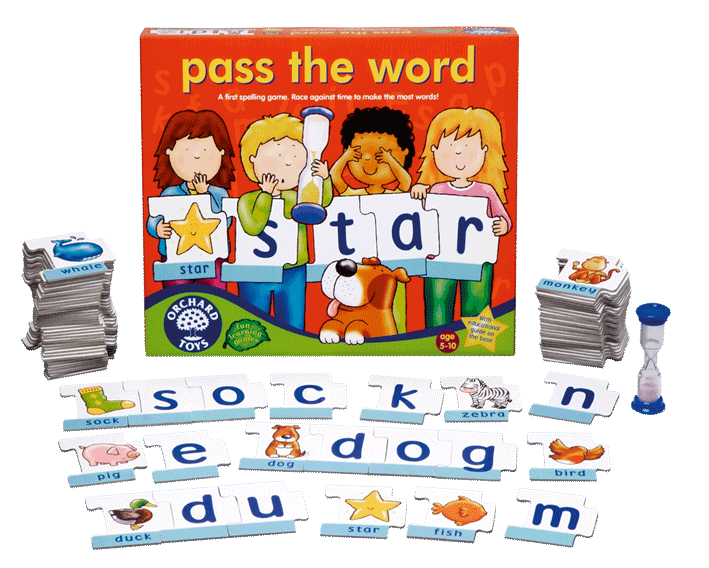
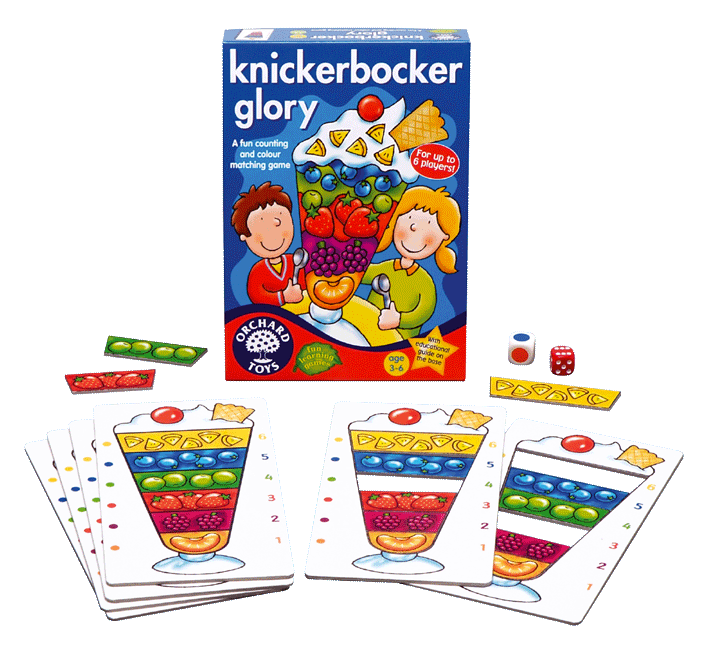
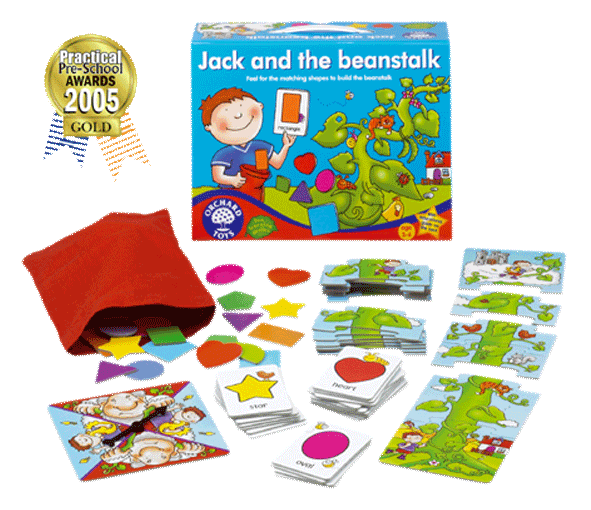
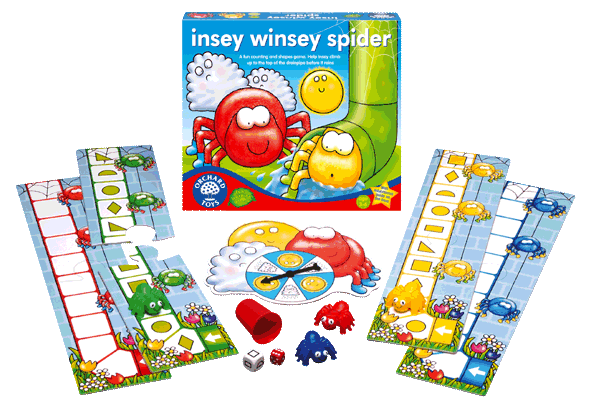
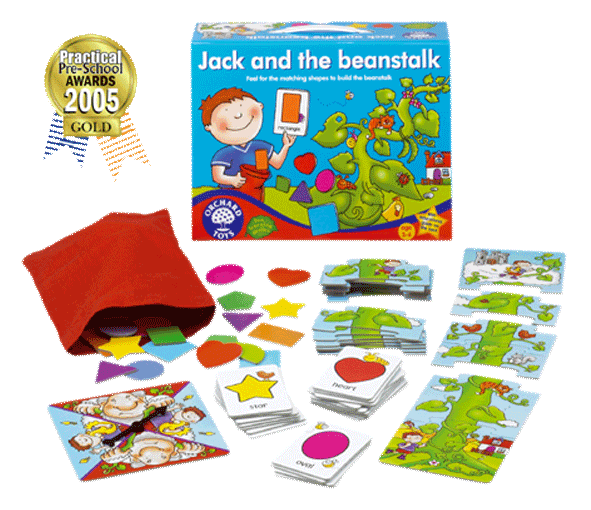
Bus stop, Insey Winsey Spider, Pass the Word, Knickerbocker Glory and Jack and the Beanstalk are now all available at Littlesheep Learning

FREE Downloadable Christmas Colouring and Activity Sheets

We now have a range of FREE downloadable Christmas Colouring and Activity Sheets available on our Resources pages. These have been hugely popular already and we have received several emails saying how much that they have been enjoyed, including:

"Thanks, the colouring sheets kept my 2 busy for a good hour yesterday"

Go and take a look and add your comments about them here.

04 December 2006

Newsletter


Did you receive our December Newsletter? If not you can read it
here - don't forget to sign up to receive our next copy so you are the first to hear our January news.

If you did receive it you were entered into a free prize draw to win a copy of "The Big Book of Things to Do" and we are pleased to announce the winner is:

Karen in Chester

Your prize will be in the post shortly - we hope you enjoy it!
Don't forget to get your children to enter our Christmas Colouring Competition.

Christmas Competition 2006


Download our Tree decorating sheet and send us your decorated trees – prizes for the best tree in the under 5’s and for the 5-12’s age groups. Hurry we need your trees back by 20th December 2006.

New Products - Added this month

Over the last month we've added lots of new products - here's a summary for you.

Sequencing Cards - These are ideal for helping to develop sequencing and language skills. This set contains card sequences including getting dressed, having a biscuit and splashing in a puddle.

Place Value Arrows – As used in schools these are a brilliant way to help children understand hundreds, tens and units.

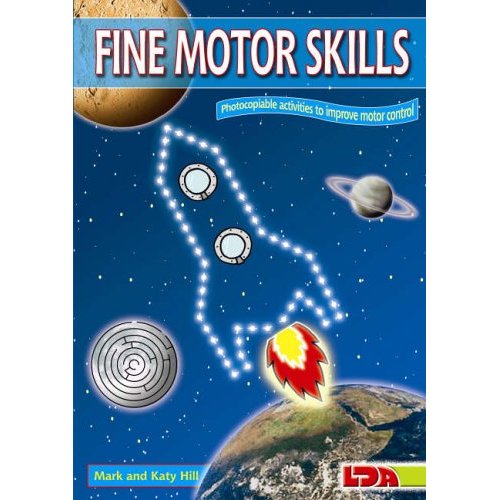
Fine Motor Skills Book - A fully photocopiable book containing activities designed to improve children's fine motor skills, a perfect partner to our best selling Cutting Skills Book.

Tally Counter – Another small item requested by a customer, this handheld tally counter is ideal for counting behaviours or requests or anything really!

27 November 2006

Competition

Subscribe to our newsletter by Friday 1st December 2006 and you will be entered into our FREE prize draw.

Also look out for our decorate a tree competition coming soon.

09 November 2006

Sale!


Remember we still have a few items left in our clearance sale

And for this week only... the
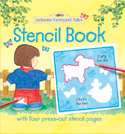
Farmyard Tales Stencil Book is HALF PRICE (whilst stocks last)

Sandpaper Letters and Dice!

I've added two new products today...

One big...
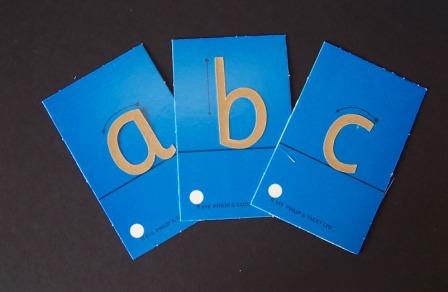
Sandpaper Letters
These sandpaper letters are great for sensory learning... I will be stocking capital letters and numbers soon so you can add to the collection if this method works for your child.

And one small...
Dice
I've started selling dice as requested by a customer (see suggest something and I'll probably stock it!), she was looking for a dice to play a game with her daughter where they threw a dice and then counted the same number of conkers - a great fun activity for learning counting / number to quantity skills.

02 November 2006

November 2006

Are you ready for Christmas? Our CLEARANCE sale has lots of products that would make ideal presents with savings of up to 50% off.

Coming Soon is our first ever Newsletter, create an
account here to receive it - it will contain news, information and special discount codes! Everyone who is registered to receive the newsletter on 1st December 2006 will be entered into a FREE prize draw so make sure you are on the list!

03 October 2006

October 2006

The one problem with owning a retail business is that Christmas has to start early and Littlesheep Learning is no exception. We have now added Christmas stock to our Seasonal category, including our very own Littlesheep Learning Resources Christmas Flashcards.

We also have added more items to our
Clearance sale so take a look for new bargains.

28 September 2006

September News Round Up

I thought today I'd let you know of some of September's news.
Littlesheep Learning is a featured business in Daffodil Design Featuring Work at Home Businesses Littlesheep Learning
Littlesheep Learning has also had an article featured at Treehugger Mums about crafty ideas to preserve Summer Memories. We write monthly for Treehugger Mums, our last article was Taking Turns.

I think that's it for this month - I'm currently working on next months article for
Treehugger Mums and have submitted a few new ones to Mumszone Parents Forum so hopefully there will be more to announce next month.

22 September 2006

Testimonial

I got this email this morning - it's the little things like this that make it all worthwhile...

Hi Elaine,
received my order - am really really pleased. Thanks so much for great products and quick delivery.

Many thanks
Meghan

Remember if you have purchased from us, if you review the products you've bought we will send you a 5% discount code for your next order.

Feel free to add your testimonials / reviews as comments to this post - and I'll get back to you with the discount code!

12 September 2006

Site Information - Update

Thanks to Alison at Daffodil Design for the changes to our site. We hope our customers find it more inviting - look out for more new products coming soon.

08 September 2006

Sight Reading - High Frequency Words

Introduction
High frequency words are the essential words which pupils will need, to be able to read even very simple texts. Some of these words have irregular or difficult spellings and are often difficult to predict from the surrounding text. The list is in two sections with 45 words to be achieved by the end of the reception year (YR) and approximately 150 words to be learned between Years 1 and 2. By the end of Y2, pupils should be able to read all these words easily, in and out of context.

Reception Words
Iarebigithe
gothesheatam
comeofandplayall
wentwetheynois
upthismyyescat
youdogseeforget
daymeonasaid
waslikeawaydadto
lookgoingmumanin


Reception Year Words are available as laminated flashcards from Littlesheep Learning

Year 1 and 2 Words
aboutcan'thermanyover
thenwhoaftercouldhere
peopletherewillagaindid
himmorepushthesewith
andohismuchpull
threewouldanotherdon'thome
mustputtimeyouras
dighousenamerantoo
backdoorhownewsaw
tookballdownifnext
schooltreebefirstjump
nightseentwobecausefrom
justnotshouldusbed
girllastnowsistervery
beengoodlaughoffso
wantboygotlittleold
somewaterbrotherhadlive(d)
oncetakewaybuthalf
loveonethanwereby
hasmadeorthatwhat
call(ed)havemakeourtheir
whencamehelpmanout
themwheremay

Plus: days of the week, months of the year, numbers to twenty, common colour words, pupil's name and address, and the name and address of their school.

07 September 2006

September 2006 News

Back to School - September is the time for the return to school, whether you are preparing for the first day at nursery or a new school or returning Littlesheep Learning would like to wish you good luck and a happy and successful year.

Please take a look at our special selection of back to school items in our Seasonal section including the popular Usborne First Experiences title Going to School.

We also have a link to the BBC 'step up to nursery' and 'step up to school' online magazines from our
News page which contain lots of information about learning and contain vouchers for money off popular BBC children's magazines.

Rol 'n' Write


We are now stocking the Rol 'n' Write
alphabet and numbers. I first came across these when working with a child with autism who had additional gross and fine motor difficulties, he found learning letter formations extremely difficult and we used these as part of a multisensory programme to help reinforce the skills needed for writing in a fun way.

These plastic 'cards' have a path which a ball bearing follows to demonstrate the correct formation. Choose any
letter or number, place the ball on the starting point – as indicated by the arrow – and watch it roll along the groove, tracking the correct formation. The ball even retraces its own path for letters such as ‘d’ or ‘p’.